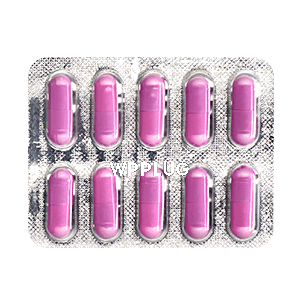
| Product dosage: 150mg | |||
|---|---|---|---|
| Package (num) | Per pill | Price | Buy |
| 30 | $1.43 | $43.01 (0%) | 🛒 Add to cart |
| 60 | $1.22 | $86.03 $73.02 (15%) | 🛒 Add to cart |
| 90 | $1.17 | $129.04 $105.03 (19%) | 🛒 Add to cart |
| 120 | $1.13 | $172.05 $136.04 (21%) | 🛒 Add to cart |
| 180 | $1.09 | $258.08 $196.06 (24%) | 🛒 Add to cart |
| 270 | $1.07
Best per pill | $387.12 $289.09 (25%) | 🛒 Add to cart |
| Product dosage: 300mg | |||
|---|---|---|---|
| Package (num) | Per pill | Price | Buy |
| 30 | $1.60 | $48.01 (0%) | 🛒 Add to cart |
| 60 | $1.38 | $96.03 $83.02 (14%) | 🛒 Add to cart |
| 90 | $1.31 | $144.04 $118.04 (18%) | 🛒 Add to cart |
| 120 | $1.27 | $192.06 $152.05 (21%) | 🛒 Add to cart |
| 180 | $1.24 | $288.09 $223.07 (23%) | 🛒 Add to cart |
| 270 | $1.21
Best per pill | $432.13 $326.10 (25%) | 🛒 Add to cart |
Synonyms | |||
More info:
Clindamycin: Potent Antibiotic for Anaerobic and Resistant Infections - Evidence-Based Review
Clindamycin is a lincosamide antibiotic derived from lincomycin, used clinically since the 1960s primarily for anaerobic and gram-positive bacterial infections. It remains a cornerstone in treating serious infections where penicillin isn’t suitable, particularly in dental, bone/joint, and skin/soft tissue contexts. The drug’s unique ability to concentrate in phagocytes and bone gives it distinctive clinical advantages we’ll explore throughout this monograph. 1. Introduction: What is Clindamycin? Its Role in Modern Medicine Clindamycin represents a class of antibiotics known as lincosamides, chemically modified from lincomycin to enhance absorption and antibacterial spectrum.
benzac
Benzoyl peroxide formulations represent one of the most established topical treatments in dermatology, particularly for acne vulgaris. The product monograph for Benzac (containing benzoyl peroxide) reflects decades of clinical use and research supporting its efficacy in managing inflammatory and non-inflammatory acne lesions through antimicrobial and comedolytic mechanisms. 1. Introduction: What is Benzac? Its Role in Modern Dermatology Benzac refers to topical formulations containing benzoyl peroxide as the active pharmaceutical ingredient. These products are classified as prescription and over-the-counter medications depending on concentration, typically ranging from 2.
benzoyl
Benzoyl peroxide represents one of those foundational dermatologic agents that somehow manages to remain both profoundly effective and consistently misunderstood. When I first started in dermatology residency, we had this battered sample case of various benzoyl peroxide formulations that looked like it had survived three different hospital mergers. The senior attending would toss it to new residents with the challenge: “Make this work when everything else fails.” What struck me then—and what continues to impress me twenty years later—is how this simple molecule continues to deliver results when more expensive, complex treatments disappoint.
Ceftin: Effective Bacterial Infection Treatment - Evidence-Based Review
Ceftin, known generically as cefuroxime axetil, is a second-generation cephalosporin antibiotic available in oral tablet form. It represents a crucial tool in the antimicrobial arsenal, designed to combat a broad spectrum of bacterial pathogens. Its development marked a significant advancement over first-generation agents, offering enhanced stability against beta-lactamases and improved coverage against Gram-negative organisms while retaining good activity against many Gram-positive bacteria. This profile makes it a versatile choice for treating common community-acquired infections, particularly those involving the respiratory tract and skin.
cleocin
Clindamycin phosphate, marketed under the brand name Cleocin, represents a cornerstone in our antimicrobial arsenal, particularly for anaerobic and gram-positive bacterial infections. As a lincosamide antibiotic derived from lincomycin, its clinical utility spans serious infections where penicillin isn’t suitable - from intra-abdominal abscesses to acne vulgaris. What’s fascinating is how this 50-year-old compound continues to evolve in its applications, especially with the rising challenges of antibiotic resistance. Cleocin: Comprehensive Antimicrobial Protection - Evidence-Based Review 1.
Differin: Targeted Acne Treatment with Proven Efficacy - Evidence-Based Review
Adapalene, marketed under the brand name Differin, represents a significant advancement in topical retinoid therapy, specifically formulated as a 0.1% gel, cream, or lotion for the treatment of acne vulgaris. Originally available only by prescription, its FDA approval for over-the-counter use in 2016 democratized access to what was previously considered a pharmaceutical-grade treatment, bridging the gap between cosmetic products and prescription retinoids. As a third-generation synthetic retinoid, Differin selectively targets retinoic acid receptors without activating all retinoid receptor subtypes, which contributes to its favorable efficacy-to-tolerability ratio compared to earlier retinoids like tretinoin.
Erythromycin: Effective Bacterial Infection Treatment - Evidence-Based Review
Erythromycin is a macrolide antibiotic derived from Streptomyces erythreus, first isolated in 1952. It represents one of the older classes of antibiotics still in clinical use today, primarily valued for its activity against Gram-positive bacteria and some atypical pathogens. Available in oral, topical, and intravenous formulations, erythromycin serves as both a therapeutic agent and, in certain contexts, a prokinetic agent for gastrointestinal motility disorders. Its role has evolved with the emergence of bacterial resistance, but it remains a relevant option in specific clinical scenarios, particularly for patients with penicillin allergies.
keftab
Cephalexin, marketed under the brand name Keftab among others, is a first-generation cephalosporin antibiotic. It’s a bactericidal agent that works by inhibiting bacterial cell wall synthesis, making it effective against a wide range of gram-positive and some gram-negative organisms. In clinical practice, we’ve been using cephalexin for decades—it’s one of those workhorse antibiotics that every clinician should have in their toolkit, though its utility has evolved with changing resistance patterns.
lincocin
Lincomycin hydrochloride, marketed under the brand name Lincocin, is an antibiotic belonging to the lincosamide class. It’s primarily indicated for serious infections caused by susceptible strains of anaerobic bacteria and certain gram-positive organisms when penicillin is either ineffective or contraindicated. We’re talking about a drug that’s been in clinical use since the 1960s, yet it maintains relevance in specific niches of infectious disease management, particularly with the rise of antibiotic resistance patterns.