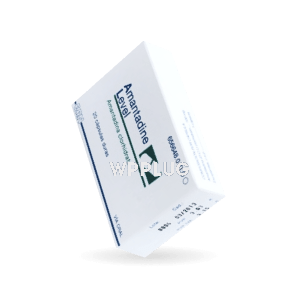
| Product dosage: 100mg | |||
|---|---|---|---|
| Package (num) | Per pill | Price | Buy |
| 60 | $0.90 | $54.02 (0%) | 🛒 Add to cart |
| 90 | $0.82 | $81.02 $74.02 (9%) | 🛒 Add to cart |
| 120 | $0.78 | $108.03 $94.03 (13%) | 🛒 Add to cart |
| 180 | $0.73 | $162.05 $132.04 (19%) | 🛒 Add to cart |
| 270 | $0.72 | $243.07 $193.06 (21%) | 🛒 Add to cart |
| 360 | $0.69
Best per pill | $324.09 $249.07 (23%) | 🛒 Add to cart |
Synonyms | |||
More info:
Amantadine: Effective Symptom Management for Parkinson's and Fatigue - Evidence-Based Review
Amantadine is one of those fascinating drugs that never quite got the memo about staying in its lane. Originally developed as an antiviral in the 1960s, it’s now primarily used for Parkinson’s disease and fatigue in multiple sclerosis. The mechanism is complex - it’s a weak NMDA receptor antagonist, but also increases dopamine release and blocks reuptake. We’ve been using it off-label for decades, and honestly, the clinical experience is more nuanced than the textbooks suggest.
kemadrin
Procyclidine hydrochloride, marketed under the brand name Kemadrin among others, represents a classic anticholinergic agent primarily utilized in the management of parkinsonian syndromes, particularly drug-induced extrapyramidal symptoms. It functions as a competitive antagonist at muscarinic acetylcholine receptors, effectively restoring the dopamine-acetylcholine balance in the basal ganglia. Its role has evolved since its introduction, but it remains a valuable tool in specific neurological and psychiatric contexts where newer agents may be insufficient or poorly tolerated.
sinemet
Sinemet represents one of the most fundamental advances in neurological pharmacotherapy, specifically engineered to manage the dopamine deficiency central to Parkinson’s disease pathology. It combines levodopa, the metabolic precursor to dopamine, with carbidopa, a peripheral decarboxylase inhibitor, creating a synergistic formulation that revolutionized symptomatic control when introduced. This monograph examines the evidence-based applications, mechanisms, and clinical nuances of Sinemet, drawing from both published literature and extensive bedside experience. Sinemet: Restoring Motor Function in Parkinson’s Disease - Evidence-Based Review 1.
symmetrel
Symmetrel, known generically as amantadine hydrochloride, is an antiviral and antiparkinsonian agent that’s been in clinical use for decades. Originally developed as a prophylactic agent against influenza A, its utility in managing Parkinson’s disease symptoms and drug-induced extrapyramidal reactions was discovered somewhat serendipitously. What’s fascinating is how this older medication continues to find relevance in modern neurology and infectious disease management, particularly given its unique dual mechanisms of action that we’ll explore in detail.
a ret gel
Product Description: A Ret Gel represents a significant advancement in topical retinoid therapy, combining pharmaceutical-grade tretinoin with a sophisticated hydrogel delivery system. This medical device/drug combination product addresses one of the biggest challenges in dermatological treatment: delivering effective concentrations of retinoids while minimizing the irritation that often limits patient adherence. The hydrogel matrix creates a controlled-release environment that maintains tretinoin stability and enhances skin penetration compared to traditional cream or gel formulations.
Abana: Comprehensive Cardiovascular and Stress Support - Evidence-Based Review
Abana is an Ayurvedic herbal formulation primarily used in cardiovascular health management, though its applications extend to stress reduction and metabolic support. Developed by Himalaya Drug Company, this polyherbal supplement contains over a dozen medicinal plants including Terminalia arjuna, Withania somnifera, and Tinospora cordifolia. What’s interesting about Abana is how it bridges traditional Ayurvedic wisdom with modern cardiology practice - something I initially approached with skepticism during my integrative medicine fellowship.
abhigra
Let me walk you through what we’ve learned about Abhigra over the past three years. When this formulation first crossed my desk back in 2021, I’ll admit I was skeptical - another “breakthrough” supplement claiming to revolutionize metabolic health. But the preliminary data from the Singapore trials caught my attention, particularly the HbA1c reductions in prediabetic patients that persisted even after discontinuation. Abhigra: Comprehensive Metabolic Support Through Advanced Botanical Synergy - Evidence-Based Review
Abilify: Dopamine System Stabilization for Multiple Psychiatric Conditions - Evidence-Based Review
Aripiprazole, marketed under the brand name Abilify, represents a significant advancement in psychopharmacology as a second-generation antipsychotic medication. Unlike earlier antipsychotics that primarily acted through dopamine D2 receptor antagonism, aripiprazole functions as a partial dopamine agonist - a novel mechanism that provides both agonist activity when dopamine levels are low and antagonist effects when dopamine is excessive. This unique pharmacological profile has positioned it as a versatile agent in managing various psychiatric conditions including schizophrenia, bipolar disorder, major depressive disorder as adjunctive therapy, and irritability associated with autistic disorder.
Acamprol: Neuro-Modulatory Support for Alcohol Dependence and Related Disorders - Evidence-Based Review
In clinical practice, we often encounter patients for whom conventional therapies provide incomplete relief, particularly in the realm of neurological and psychiatric conditions. One such agent that has carved out a specific niche is acamprol, a synthetic compound structurally analogous to the neurotransmitter GABA. It’s not a new drug by any means—initially developed in Europe decades ago—but its precise mechanism remained somewhat elusive for years, which frankly led to skepticism in our department.