clomid
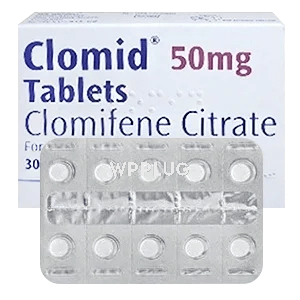
| Product dosage: 100mg | |||
|---|---|---|---|
| Package (num) | Per pill | Price | Buy |
| 10 | $5.50 | $55.02 (0%) | 🛒 Add to cart |
| 20 | $3.75 | $110.04 $75.02 (32%) | 🛒 Add to cart |
| 30 | $2.83 | $165.05 $85.03 (48%) | 🛒 Add to cart |
| 60 | $1.67 | $330.11 $100.03 (70%) | 🛒 Add to cart |
| 90 | $1.22 | $495.16 $110.04 (78%) | 🛒 Add to cart |
| 120 | $1.08 | $660.22 $130.04 (80%) | 🛒 Add to cart |
| 180 | $0.83 | $990.32 $150.05 (85%) | 🛒 Add to cart |
| 270 | $0.78 | $1485.49 $210.07 (86%) | 🛒 Add to cart |
| 360 | $0.71
Best per pill | $1980.65 $255.08 (87%) | 🛒 Add to cart |
| Product dosage: 25mg | |||
|---|---|---|---|
| Package (num) | Per pill | Price | Buy |
| 20 | $2.75 | $55.02 (0%) | 🛒 Add to cart |
| 30 | $2.17 | $82.53 $65.02 (21%) | 🛒 Add to cart |
| 60 | $1.33 | $165.05 $80.03 (52%) | 🛒 Add to cart |
| 90 | $1.00 | $247.58 $90.03 (64%) | 🛒 Add to cart |
| 120 | $0.83 | $330.11 $100.03 (70%) | 🛒 Add to cart |
| 180 | $0.64 | $495.16 $115.04 (77%) | 🛒 Add to cart |
| 270 | $0.48 | $742.74 $130.04 (82%) | 🛒 Add to cart |
| 360 | $0.43
Best per pill | $990.32 $155.05 (84%) | 🛒 Add to cart |
| Product dosage: 50mg | |||
|---|---|---|---|
| Package (num) | Per pill | Price | Buy |
| 10 | $4.50 | $45.01 $45.01 (0%) | 🛒 Add to cart |
| 20 | $3.25 | $90.03 $65.02 (28%) | 🛒 Add to cart |
| 30 | $2.50 | $135.04 $75.02 (44%) | 🛒 Add to cart |
| 60 | $1.50 | $270.09 $90.03 (67%) | 🛒 Add to cart |
| 90 | $1.11 | $405.13 $100.03 (75%) | 🛒 Add to cart |
| 120 | $0.88 | $540.18 $105.03 (81%) | 🛒 Add to cart |
| 180 | $0.72 | $810.27 $130.04 (84%) | 🛒 Add to cart |
| 270 | $0.65 | $1215.40 $175.06 (86%) | 🛒 Add to cart |
| 360 | $0.60
Best per pill | $1620.53 $215.07 (87%) | 🛒 Add to cart |
Synonyms
| |||
Clomiphene citrate, commonly known by its brand name Clomid, represents one of the most foundational and extensively studied oral ovulation induction agents in reproductive medicine. As a selective estrogen receptor modulator (SERM), its primary mechanism involves blocking estrogen receptors at the hypothalamic level, which tricks the body into perceiving low estrogen levels. This prompts increased gonadotropin-releasing hormone (GnRH) secretion from the hypothalamus, subsequently stimulating the pituitary gland to release more follicle-stimulating hormone (FSH) and luteinizing hormone (LH). The resulting hormonal cascade promotes the development and maturation of ovarian follicles, ultimately leading to ovulation in anovulatory or oligo-ovulatory women. First approved by the FDA in 1967, this medication has remained a first-line treatment for infertility associated with ovulatory dysfunction for over five decades, with millions of treatment cycles completed worldwide.
Key Components and Bioavailability of Clomid
Clomiphene citrate exists as a racemic mixture containing approximately 38% zuclomiphene and 62% enclomiphene isomers, each with distinct pharmacological properties. Zuclomiphene demonstrates a significantly longer half-life (approximately two weeks) compared to enclomiphene (approximately 5-7 days), which contributes to Clomid’s cumulative effects during treatment cycles. The medication is typically administered as 50mg tablets, with bioavailability studies showing approximately 85-90% oral absorption when taken with food, though absorption isn’t significantly affected by fasting. Peak serum concentrations occur within 4-6 hours post-administration, with therapeutic effects persisting for weeks due to the extended half-life of the zuclomiphene isomer. The liver extensively metabolizes both isomers via cytochrome P450 enzymes, primarily CYP2D6 and CYP3A4, with eventual biliary and renal excretion of metabolites.
Mechanism of Action: Scientific Substantiation
The scientific foundation for Clomid’s action rests on its competitive antagonism of estrogen receptors, particularly in the hypothalamus. In normally cycling women, rising estrogen levels from developing follicles provide negative feedback to the hypothalamus, regulating GnRH pulsatility. In anovulatory women, particularly those with polycystic ovary syndrome (PCOS), this feedback system is often dysregulated. By occupying hypothalamic estrogen receptors without activating them, Clomid creates a false signal of estrogen deficiency. The hypothalamus responds by increasing GnRH pulse frequency and amplitude, which stimulates the anterior pituitary to secrete more FSH and LH. This heightened gonadotropin production directly stimulates ovarian follicular development. Interestingly, the medication’s anti-estrogenic effects extend to other estrogen-responsive tissues, including the cervical glands (potentially affecting cervical mucus) and endometrium (possibly impacting endometrial thickness), which creates both therapeutic benefits and potential limitations that we’ll explore in subsequent sections.
Indications for Use: What is Clomid Effective For?
Clomid for Ovulation Induction
The primary and most evidence-supported indication for Clomid remains ovulation induction in anovulatory women, particularly those with WHO Group II ovulation disorders characterized by normogonadotropic normoestrogenic anovulation. Success rates for ovulation induction typically range from 60-85% per cycle, with conception rates of approximately 15-25% per ovulatory cycle in appropriately selected patients. The most robust evidence exists for women with PCOS, where Clomid demonstrates superiority to placebo and often serves as first-line pharmacological therapy.
Clomid for Unexplained Infertility
Despite some controversy, Clomid finds application in unexplained infertility, often combined with intrauterine insemination (IUI). The theoretical basis involves potentially enhancing follicular recruitment in women with subtle ovulatory dysfunction and improving timing for insemination. However, recent meta-analyses suggest limited benefit in truly unexplained cases without ovulatory factors.
Clomid for Luteal Phase Defect
Though less commonly prescribed for this indication today, Clomid can correct luteal phase defects by enhancing follicular development and subsequent corpus luteum function. The improved follicular development typically leads to more robust progesterone production during the luteal phase.
Clomid for Male Infertility (Off-label)
Some reproductive specialists prescribe Clomid off-label for male infertility, particularly in cases of hypogonadotropic hypogonadism. The medication can stimulate increased gonadotropin production, potentially improving spermatogenesis in selected cases, though evidence remains less robust than for female ovulation induction.
Instructions for Use: Dosage and Course of Administration
Treatment typically initiates on day 3, 4, or 5 of the menstrual cycle (with day 1 being the first day of spontaneous or progestin-induced bleeding) at a starting dose of 50mg daily for 5 consecutive days. Earlier initiation (day 2-3) may enhance follicular recruitment in some patients, while later initiation (day 5-7) may reduce the risk of multiple follicular development. Dosing timing (morning vs. evening) doesn’t significantly impact efficacy but should remain consistent throughout the treatment cycle.
| Indication | Starting Dose | Duration | Administration | Cycle Monitoring |
|---|---|---|---|---|
| Ovulation Induction | 50mg | 5 days | Once daily, with or without food | Follicular tracking via ultrasound from day 10-12 |
| Unexplained Infertility (with IUI) | 50mg | 5 days | Once daily | Ultrasound monitoring + timed IUI |
| Male Infertility (off-label) | 25-50mg | Daily or every other day | Once daily | Semen analysis every 2-3 months |
Dose titration follows response assessment, typically increasing by 50mg increments in subsequent cycles up to a maximum of 150mg daily for 5 days. Most guidelines recommend limiting treatment to 3-6 ovulatory cycles due to diminishing returns and potential endometrial effects with prolonged use. Cycle monitoring should include mid-cycle follicular ultrasound to assess response and prevent higher-order multiple pregnancies, with some protocols incorporating trigger shots (hCG) for precise ovulation timing.
Contraindications and Drug Interactions
Clomid carries several important contraindications, including pregnancy (Category X), liver disease, abnormal uterine bleeding of undetermined etiology, ovarian cysts unrelated to PCOS, and uncontrolled thyroid or adrenal dysfunction. The medication also demonstrates numerous clinically significant drug interactions that warrant careful consideration. Tamoxifen and other SERMs may produce additive anti-estrogenic effects, while CYP2D6 inhibitors (like paroxetine, fluoxetine) may alter clomiphene metabolism. Rifampin and other CYP3A4 inducers can potentially reduce Clomid efficacy by increasing its clearance. Perhaps most notably, Clomid may interfere with the efficacy of hormonal contraceptives, necessitating alternative barrier methods during treatment.
Common side effects include vasomotor symptoms (“hot flashes”) in approximately 10% of users, abdominal discomfort/bloating (7%), breast tenderness (5%), and visual disturbances (2%) typically described as blurring or spots. The visual symptoms usually resolve upon discontinuation but warrant immediate evaluation and typically constitute an indication for permanent discontinuation. More serious but rare adverse effects include ovarian hyperstimulation syndrome (OHSS), though the risk is substantially lower than with injectable gonadotropins.
Clinical Studies and Evidence Base
The evidence base for Clomid spans decades, with numerous randomized controlled trials and meta-analyses confirming its efficacy. The landmark 2010 Cochrane review of 28 randomized trials concluded that Clomid significantly improves ovulation rates (OR 5.63) and pregnancy rates (OR 2.41) compared to placebo in women with PCOS. The 2018 review in Human Reproduction Update reinforced Clomid’s position as first-line therapy for anovulatory infertility, though noting letrozole may offer advantages in certain PCOS subgroups. Longitudinal studies have demonstrated no significant increase in congenital anomalies with Clomid use, with malformation rates comparable to the general population (2-3%). However, some studies suggest a slight increase in the incidence of ovarian tumors with prolonged use (>12 cycles), though causality remains uncertain given the underlying fertility issues in this population.
Comparing Clomid with Similar Products and Choosing Quality Medication
When comparing ovulation induction agents, Clomid demonstrates distinct advantages and limitations relative to alternatives like letrozole and gonadotropins. Letrozole, an aromatase inhibitor, typically produces similar ovulation rates but may yield better pregnancy outcomes in women with PCOS and higher BMI, potentially due to less anti-estrogenic effects on the endometrium. Gonadotropins offer superior efficacy in Clomid-resistant cases but require injections, more intensive monitoring, higher costs, and carry greater risks of OHSS and multiple gestation.
For patients and providers selecting Clomid, several factors ensure quality medication:
- Verify FDA approval and manufacturer reputation
- Confirm consistent tablet appearance and packaging
- Consider brand versus generic - while bioequivalent, some clinicians report more predictable responses with brand name in challenging cases
- Ensure proper storage conditions (room temperature, away from moisture)
Frequently Asked Questions about Clomid
What is the success rate of Clomid for getting pregnant?
Cumulative pregnancy rates typically reach 30-40% within 3 cycles and 50-60% within 6 cycles for appropriately selected anovulatory women. Success rates decline with advancing female age, prolonged infertility duration, and additional infertility factors.
How long does it take for Clomid to work?
Ovulation typically occurs 5-10 days after completing the 5-day course, with most women ovulating around cycle days 14-19. Pregnancy can occur in the first treatment cycle but may take several cycles in women with additional fertility factors.
What are the signs that Clomid is working?
Positive indicators include regular menstrual cycles (if previously irregular), mid-cycle fertile cervical mucus, ovulation pain (mittelschmerz), confirmed ovulation via basal body temperature shift, ultrasound evidence of follicular development, and serum progesterone elevation during the luteal phase.
Can Clomid cause twins or multiples?
The twin rate with Clomid is approximately 5-8%, while triplets or higher-order multiples occur in <1% of cycles. This represents a significant increase over the natural twin rate (1-2%) but remains substantially lower than with gonadotropin treatments.
What happens if Clomid doesn’t work?
“Clomid resistance” (failure to ovulate at 150mg dose) or “Clomid failure” (failure to conceive despite ovulation) occurs in approximately 20-25% of users. Next steps typically include switching to letrozole, adding metformin (in PCOS), or moving to gonadotropins with or without IUI.
Conclusion: Validity of Clomid Use in Clinical Practice
After nearly six decades of clinical use, Clomid maintains its position as a foundational treatment for ovulatory disorders, offering favorable efficacy, oral administration, relatively low cost, and manageable side effects for most patients. While newer agents like letrozole have emerged as alternatives, particularly in specific patient subgroups, Clomid’s extensive safety database and predictable response profile continue to support its role in contemporary reproductive medicine. The medication’s risk-benefit profile remains favorable when prescribed to appropriate candidates with proper monitoring, though treatment should typically be limited to 3-6 ovulatory cycles before reevaluating strategy.
I remember when I first started incorporating Clomid into my practice back in the late 90s - we were still figuring out the optimal monitoring protocols. There was this one patient, Sarah, 29-year-old with classic PCOS features - irregular cycles, hirsutism, the works. We started her on the standard 50mg day 5-9 protocol, but her day 21 progesterone came back at just 8 ng/mL - technically ovulatory but suboptimal. My senior partner at the time insisted we jump straight to 100mg, but I’d read some emerging literature about earlier start dates improving follicular recruitment.
We butted heads for a good two weeks about it - he was old school, believed in the established protocols, worried about multiple gestation risks with earlier starts. I finally convinced him to let me try cycle 2 with 50mg day 3-7 instead. Lo and behold, Sarah developed a beautiful 22mm dominant follicle with a progesterone of 28 ng/mL that next cycle. She conceived that very cycle - delivered healthy twins actually, which was ironic given our earlier concerns about multiples.
What surprised me was how variable the endometrial response could be. We had another patient, Maria, who ovulated beautifully on 50mg - perfect follicles, great progesterone levels - but her endometrium barely reached 6mm. We tried everything - switched to letrozole, added vaginal estrogen - never could get that lining to cooperate. She eventually moved to IVF with a gestational carrier. Meanwhile, Jessica - similar profile, same protocol - developed picture-perfect 10mm trilaminar endometrium every time.
The failed insights really came with our PCOS patients with higher BMIs. We kept following the standard dosing protocols, but the pregnancy rates were disappointing. It took us longer than it should have to recognize that these women often needed extended courses or slightly higher doses. We had one woman, Lisa, 35 with BMI 38 - failed three cycles at 100mg. Almost moved her to injectables, but decided to try one cycle at 150mg for 7 days instead of 5. She developed two mature follicles and conceived her daughter that cycle.
The longitudinal follow-up has been revealing too. We’ve been tracking our Clomid patients for years now - most of the successful conceptions resulted in healthy singletons with normal development. Interestingly, we’ve had several patients who conceived with Clomid for their first child spontaneously conceived their second - makes you wonder about the “reset” effect some providers talk about.
Just saw Sarah recently actually - her twins are in college now, and she brought her daughter in for a well-woman exam. Still sends Christmas cards every year with family photos. Those early successes with proper patient selection and individualized protocols - that’s what solidified my approach to ovulation induction. The art really is in tailoring the science to each unique patient.